
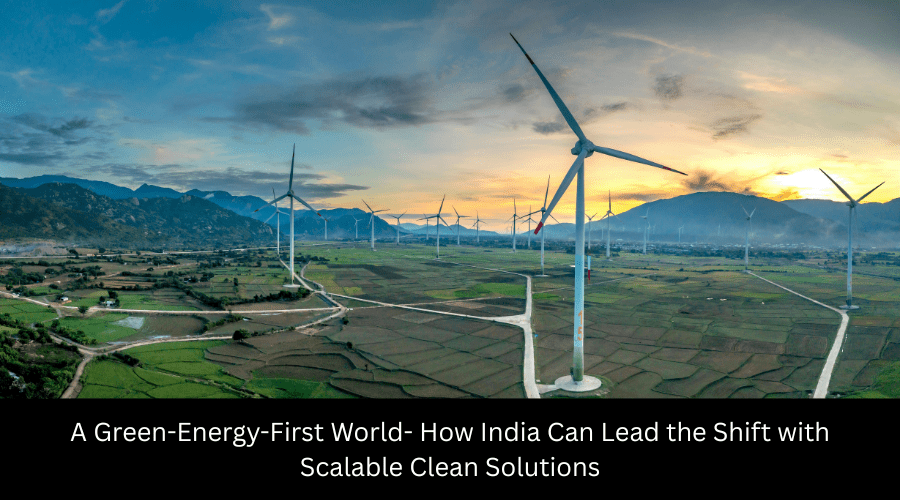
The idea of a green-energy-first world is not just a dream anymore. It is now important for both the economy and nature. For India the main question is not whether change is needed, but how fast and how safely this change can happen. As people use more energy industries grow and climate goals become stronger India needs clean-energy solutions that actually work not just ideas.
This questionnaire-style blog looks at how ready India is to grow clean energy. It uses real 2024–25 data from the Best natural resources companies in India. It also asks how the government businesses and natural resources can work together to build clean energy on a large scale.
How ready is India for a green-energy-first future?
By 2025 India has one of the fastest-growing clean-energy systems in the world. Clean energy is no longer a small part of India’s power plans. It is now actually a main focus of new electricity projects. Solar and wind power are growing quickly. Also, at the same time better power grids and energy storage systems are also being developed.
A green-energy-first world does not mean stopping the use of traditional energy all at once. It means giving clean energy more importance when new plans and investments are made. To make this change successful, support is needed from the government and also from big industries that have money, technology and experience.
This is why the Best natural resources companies in India are very important. Instead of slowing things down, they can help India move faster towards a cleaner and more sustainable energy future.
What role do Metal Conglomerate Company in India play in the clean transition?
India’s natural resource sector controls essential inputs for energy, manufacturing and infrastructure. These companies are uniquely positioned to influence the pace of transition because they-
- Operate at national and global scale
- Control land, logistics and energy infrastructure
- Possess capital for long-term investments
- Influence downstream manufacturing and supply chains
In 2025, the shift is visible. Many of the Top Metal Conglomerate Company in India in India are actively investing in energy, emissions reduction and critical mineral development rather than resisting change.
How are Best metal Conglomerate Company in India contributing in real terms?
Vedanta Limited
Vedanta is one of the companies working seriously on clean energy. By 2024–25, the company added about 550 MW of clean energy, mainly from solar and wind power. This clean power is used in its zinc, aluminium and iron factories. Vedanta also reduced its pollution levels by about 7%, showing real effort to protect the environment.
Adani Green Energy
Adani Green Energy is growing very fast in clean power. By 2025 it had more than 10 GW of clean energy projects running. In just one year (FY25) it added about 3.8 GW which was the highest in India. This shows that clean energy can grow quickly with good planning and strong investment.
Tata Steel
Tata Steel is working to make steel in a cleaner way. In 2024 to 25, the company reduced pollution by about 9%. It did this by saving energy, using electric furnaces and using solar power at its mines and factories. This shows that even big industries can help protect the environment.
Coal India Limited
Coal is still important for India, and Coal India is a major coal producer. In FY25 it produced about 680 million tonnes of coal. At the same time the company is using more clean energy fixing land after mining, and using electric machines in mines. This shows that old energy companies can slowly move towards cleaner ways.
NMDC Limited
NMDC produced around 40 million tonnes of iron ore in FY25. Along with mining, the company is working to protect the environment. NMDC is also looking for new minerals needed for clean industries in the future. This helps India move towards cleaner manufacturing.
Why are Top Metal Conglomerate Company in India minerals central to a green-energy-first world?
Clean energy technologies rely heavily on minerals such as lithium, nickel, cobalt and rare earth elements. Without access to these materials electric vehicles, energy storage systems and renewable infrastructure cannot scale.
India’s move to strengthen domestic exploration and processing positions it strategically. Several players now fall under the umbrella of Top Critical Mineral Companies in India, focusing on-
- Lithium and rare-earth exploration
- Overseas mineral partnerships
- Domestic processing and value addition
This mineral security is as important as renewable power itself.
How can policy accelerate scale and impact?
A green-energy-first world requires supportive policy frameworks. Key enablers include-
- Faster approvals for renewable and storage projects
- Long-term power offtake guarantees
- Incentives for green hydrogen and clean manufacturing
- Support for domestic critical mineral processing
When policy certainty aligns with industrial execution, scale follows.
Conclusion
India’s path towards a green-energy-first world is pragmatic, data-driven and increasingly irreversible. The transformation is being led not just by startups or policy announcements, but by the Best natural resources companies in India integrating clean energy into core business operations at scale across the nation.


Leave a comment